Zero emission IKEA deliveries
At IKEA, we have committed to cutting carbon emissions in all stages of our value chain. As a result, Ingka Group – the biggest IKEA franchisee – is aiming for more than 90% of deliveries globally, to be delivered by electric vehicles (EV) or other IKEA zero-emission solutions by 2028*.
*“Zero-emission” refers to delivery vehicles that do not emit exhaust gases during operation, such as electric vehicles. However, this does not guarantee that the electricity used to charge these vehicles comes from renewable sources. The term reflects the absence of tailpipe emissions, not the full lifecycle emissions of the energy used.
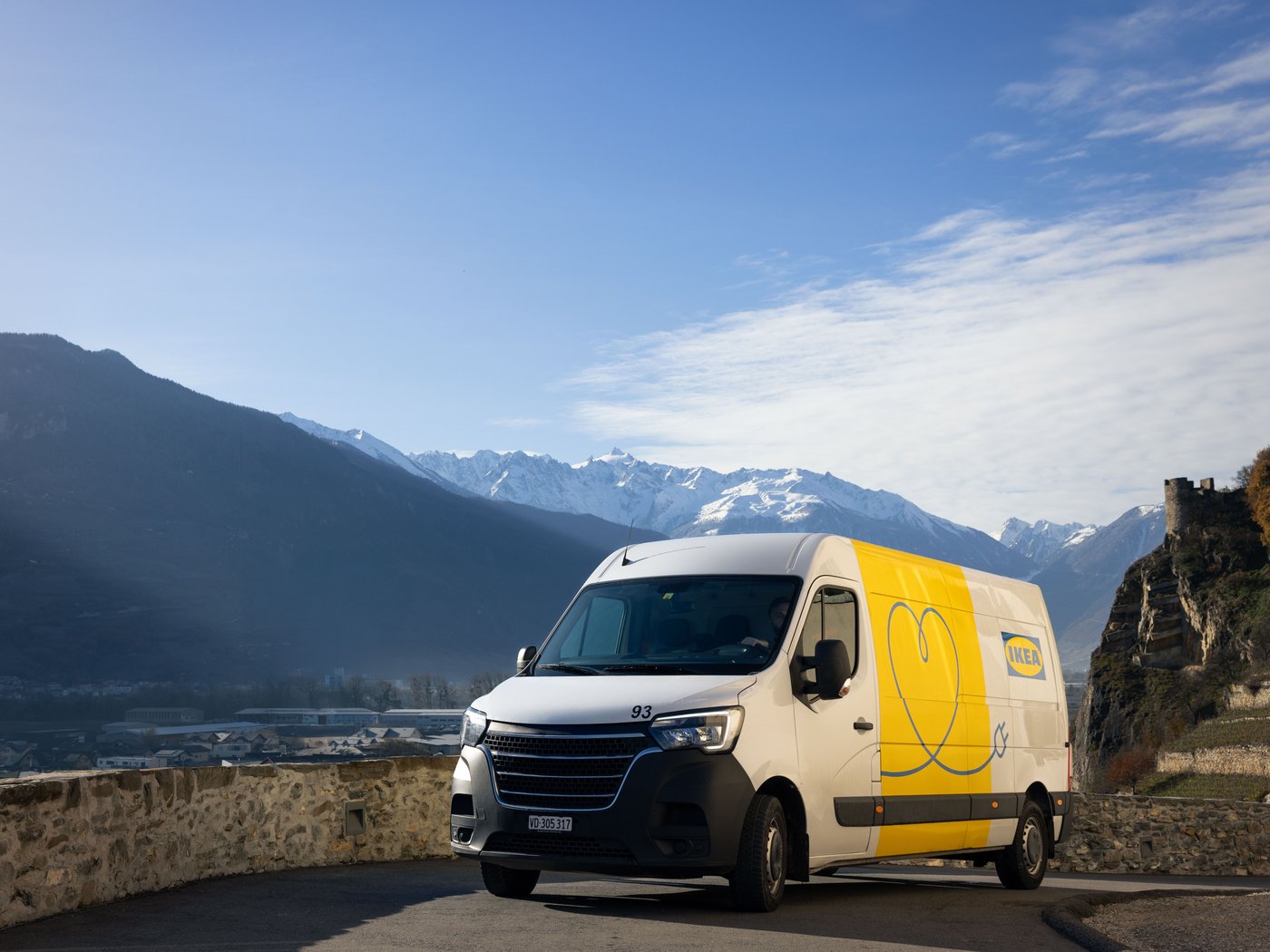
“By promoting the use of EVs for home deliveries, we want to help improve the local air quality around our stores and act as a good neighbour. With this we hope to contribute towards cleaner air for the communities we serve.”
IKEA zero-emissions, what’s our approach?
Our methodology for achieving zero-emission deliveries involves:
Localisations
Identifying and adopting technologies and fuels suitable for the local infrastructure.
Collaborations
Collaborating closely with local authorities, partners, and communities to create an enabling environment for zero-emission logistics.
Reporting
Regularly monitoring and transparently reporting our progress to ensure accountability.

Electrifying our delivery fleet
- We have come a long way since we set the target in 2018. Already in 2019 Shanghai became the first city where 100% of our home deliveries are transported by EV vehicles and today we have 100% zero-emission home deliveries in 300+ locations and more than 2500+ electric vehicles are in operation globally.
- By the end of FY25, 60.1% of our retail home deliveries were made by electric or other zero-tailpipe-emission vehicles. This reflects an increase in the number of zero emissions vehicles used in last mile deliveries, investment in zero emissions trucks for longer distances and improvements in route efficiency to enable more deliveries per journey.
- We are working to more rapidly roll out zero emission vehicles through additional investments in vehicles and charging infrastructure, piloting new innovations and collaborating with other industry players. These actions include collaborating with truck manufacturers to test new EVs, investing in charging infrastructure, and advocating for policy changes to overcome regulatory barriers.
Our approach to increasing the share of last-mile deliveries using zero-tailpipe-emission vehicles in Belgium consists of:
- Setting clear and achievable targets to reduce greenhouse gas emissions in terms of our delivery fleet.
By the end of 2025, 68% of our last-mile deliveries in Belgium were carried out using vehicles with zero tailpipe emissions. From our IKEA stores, this was 77% of all last-mile deliveries, with a 100% result for the stores of Anderlecht, Hasselt, Liège, Mons and Zaventem.
Targets for the coming years:- More than 85% of last-mile deliveries carried out using vehicles with zero tailpipe emissions by the end of 2026.
- 95% of last-mile deliveries carried out using vehicles with zero tailpipe emissions by the end of 2027.
- 100% of last-mile deliveries carried out using vehicles with zero tailpipe emissions by the end of 2028.
- Having about 100 electric vehicles on the roads of Belgium (April 2026) making deliveries for IKEA.
- Identifying and applying the technologies and fuels most suitable for the infrastructure in Belgium. Looking at the many alternatives (e.g. hydrogen, other types of vehicles) and not just electric vehicles.
- Over the next 12 months, we will continue expanding charging infrastructure at customer meeting points to support electric vehicle use by customers, co-workers and service partners.
- Working closely with local authorities and communities (cities and regions), establishing partnerships by joining the Green Deal Brussels Capital Region and Green Deal Flanders to support the transition towards logistics solutions with reduced greenhouse gas emissions and increased use of vehicles with zero tailpipe emissions.
- Regularly monitoring our progress and report on it transparently in our “Summary Annual Report and Sustainability Report” to ensure compliance.
The percentages presented refer to the share of last-mile deliveries carried out using vehicles with zero tailpipe emissions. While these vehicles do not generate exhaust emissions during operation, environmental impacts may still occur elsewhere in their lifecycle, including vehicle production, maintenance and energy generation.